
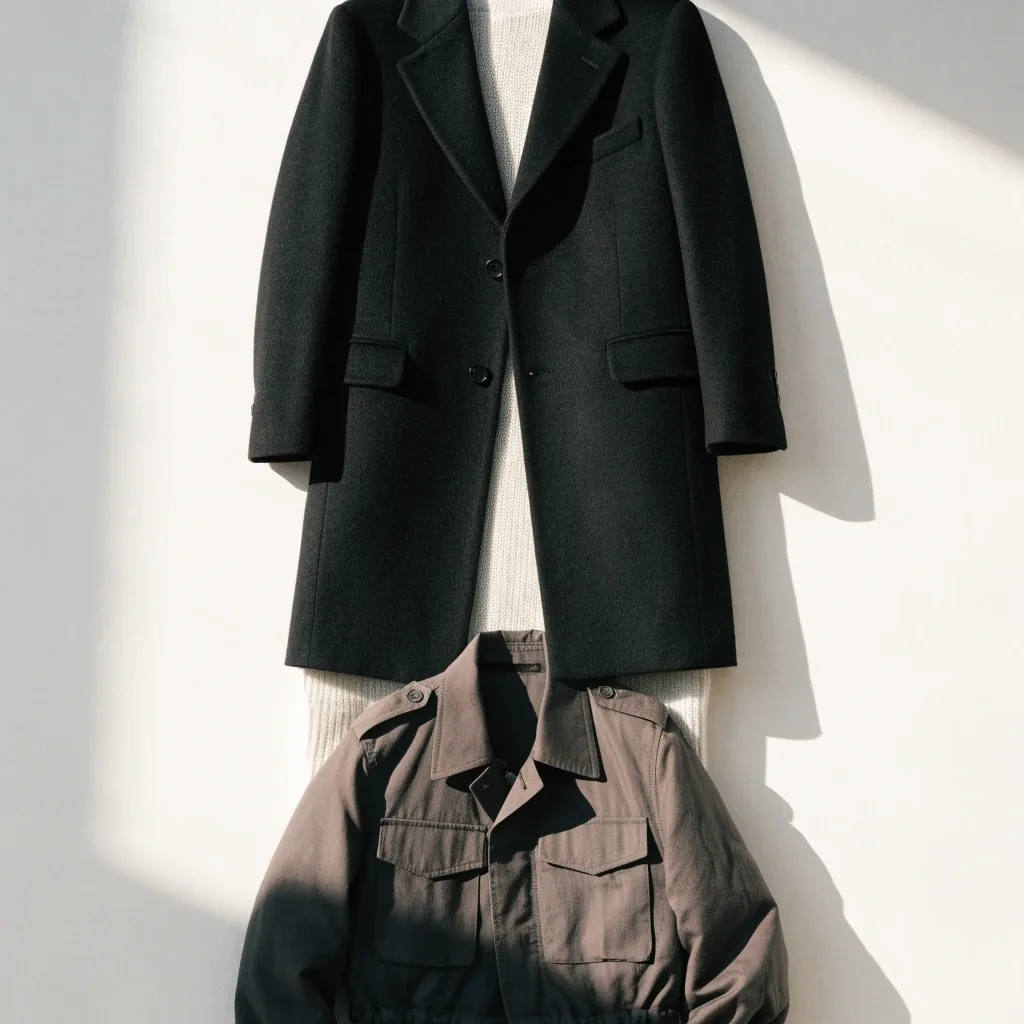
Capsule wardrobe guides
Build a capsule wardrobe that works past one season
A capsule wardrobe is not a smaller closet. It is a closet where every piece has a job, and where the pieces combine without effort. These guides walk through categories, layering logic, and long-wear priorities so the result holds up in month six, not just on the day you finish planning.
Start with your week, not a mood board
Before you list a single garment, count how you actually spend your days. Five office days and one dinner out is a different wardrobe from two office days, three site visits, and a weekend of errands. Climate matters too, and so does your tolerance for ironing. We build capsules around those constraints because they are what make a wardrobe usable. A beautiful plan that ignores your Tuesday will collapse by Thursday.
Write the week down before you open a closet. Note the days you need to look considered, the days you need to move, and the days nobody sees you. Then note the temperatures you will actually dress for, and whether you will press a shirt in the morning. Those four answers decide most of the plan. A wardrobe essentials list copied from someone else rarely survives contact with your calendar.
- Count first
- Days by setting, not days by mood. Office, outdoors, evening, weekend.
- Climate second
- The layer you wear four months a year earns its place before the one you wear twice.
- Care third
- If you will not iron it, plan around it. Pressing is a real weekly cost.
- Then list
- Only now do garments enter the page, one per job you counted.
The five categories
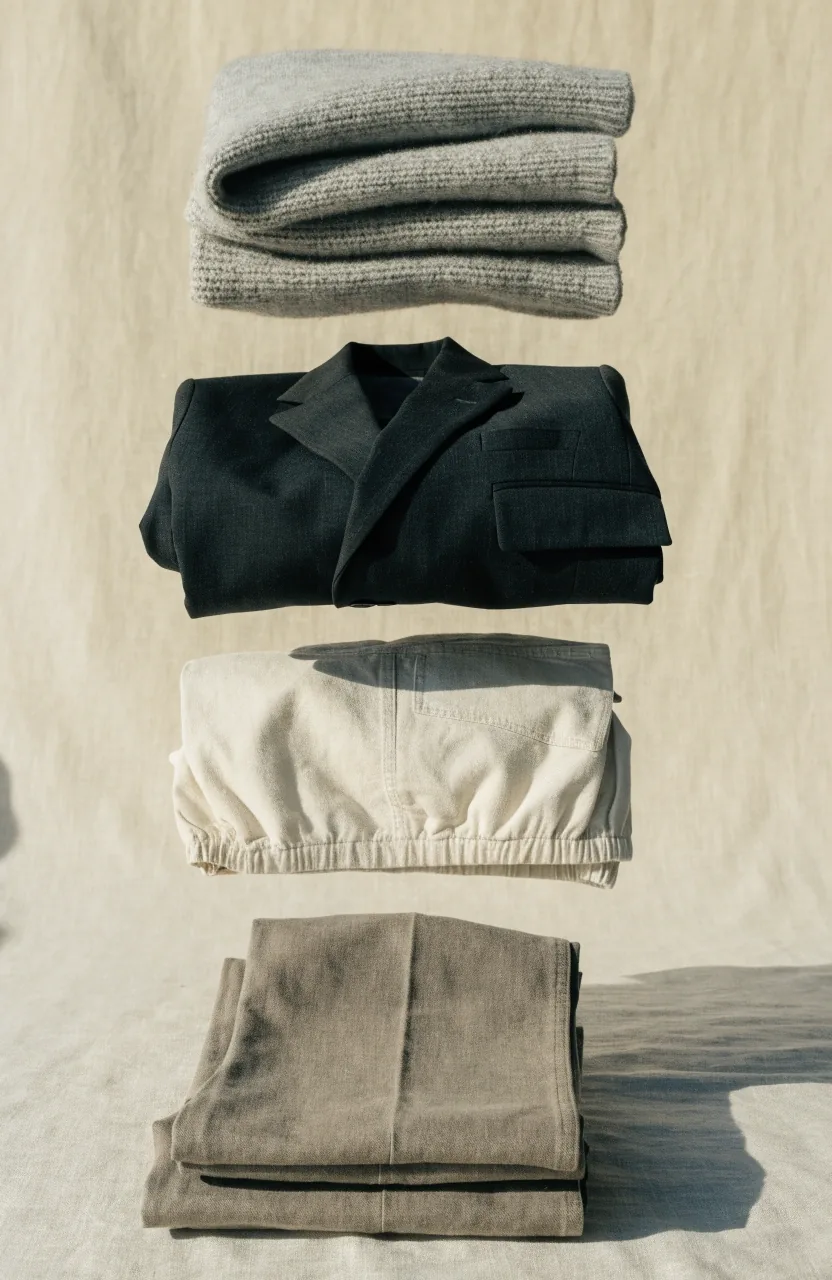
Most working capsules reduce to five groups: base layers, mid-layers, outerwear, bottoms, and shoes, with accessories as a finishing layer. The point of categories is to prevent duplication. If you own six mid-layers and one pair of trousers that fit, the imbalance is the problem, not the size of your closet. We set rough counts per category and adjust them to your week. Counts are a starting frame, not a rule.
-
Base layers
Thin knits, plain shirts, fine cotton. They sit against skin and carry the least bulk, so they set the temperature for everything above.
-
Mid-layers
Oversize knitwear, utility jackets, mid-weight button-downs. This is where wardrobes go wrong most often, because two pieces doing the same job cancel each other out.
-
Outerwear
One protective layer per climate band. A coat you wear four months a year beats three you rotate by weather guesswork.
-
Bottoms
Two or three that fit properly. Trousers carry more of the week than any other category, and tailoring here pays back fastest.
-
Shoes and accessories
Two pairs that cover walking and evenings, plus a belt, a bag, and one scarf or statement piece that finishes the layers.
Layering logic you can repeat
Layering works when each layer has a defined weight and purpose. A thin base, a warm mid-layer, a protective outer layer. When two layers compete for the same job, you get bulk without warmth, and you end up carrying one of them. Utility jackets, oversize knitwear, and mid-weight button-downs cover most of the mid-layer needs. Write down the pairing that works for you and repeat it. Repetition is not boring here. It is what makes getting dressed fast.
Layer one
A thin base against skin. Fine cotton or a light knit that holds shape without adding width at the shoulder.
Layer two
The warmth layer, and the one people over-buy. Pick one silhouette: a utility jacket, an oversize knit, or a mid-weight button-down. Not all three in the same week.
Layer three
Protection from weather and from the room. This is the layer you remove indoors, so it should be the easiest one to take off and carry.
The repeat
One base, one mid, one outer, chosen once. Getting dressed in three moves is the whole point of the system.

Long-wear priorities: fabric and construction
Two garments can look identical on a rack and behave completely differently after a year. Fabric weight, stitch density, and how a seam is finished tell you more than a label does. A heavier cotton holds its shape; a thin knit pills at friction points.
-
Check seams at stress points: shoulder, underarm, and the seat of a trouser. A seam that is finished, not just closed, is the first sign a piece will last.
-
Look at the lining and the buttonholes. A cleanly finished buttonhole and a lining that sits flat tell you more than the price tag does.
-
Weigh the fabric in your hand. Heavier cotton and dense wool hold their shape through repeat wear; thin knits pill where a bag strap or a seatbelt rubs.
-
Test the shoe before the outfit. If the pair you own already covers walking and evenings, new shoes are a want, not a gap.
Repetition is not boring here. It is what makes getting dressed fast.
Oversize without losing shape
Oversize is a proportion decision, not a size decision. The trick is balancing volume in one area with structure somewhere else. A boxy jacket over a fitted base reads intentional; a boxy jacket over a boxy trouser reads shapeless. When you shop, check where the shoulder sits and how the hem falls. If both are drifting, size down. Oversize tailoring is one of the more durable trends in recent seasons, but only when the proportions are deliberate.
The same test applies to an oversize utility jacket, which is the piece most people buy twice by accident. If the shoulder seam lands past your natural shoulder and the sleeve stacks at the wrist, you have bought volume, not cut. One oversize outer piece per capsule is usually enough.
Tailoring as a foundation
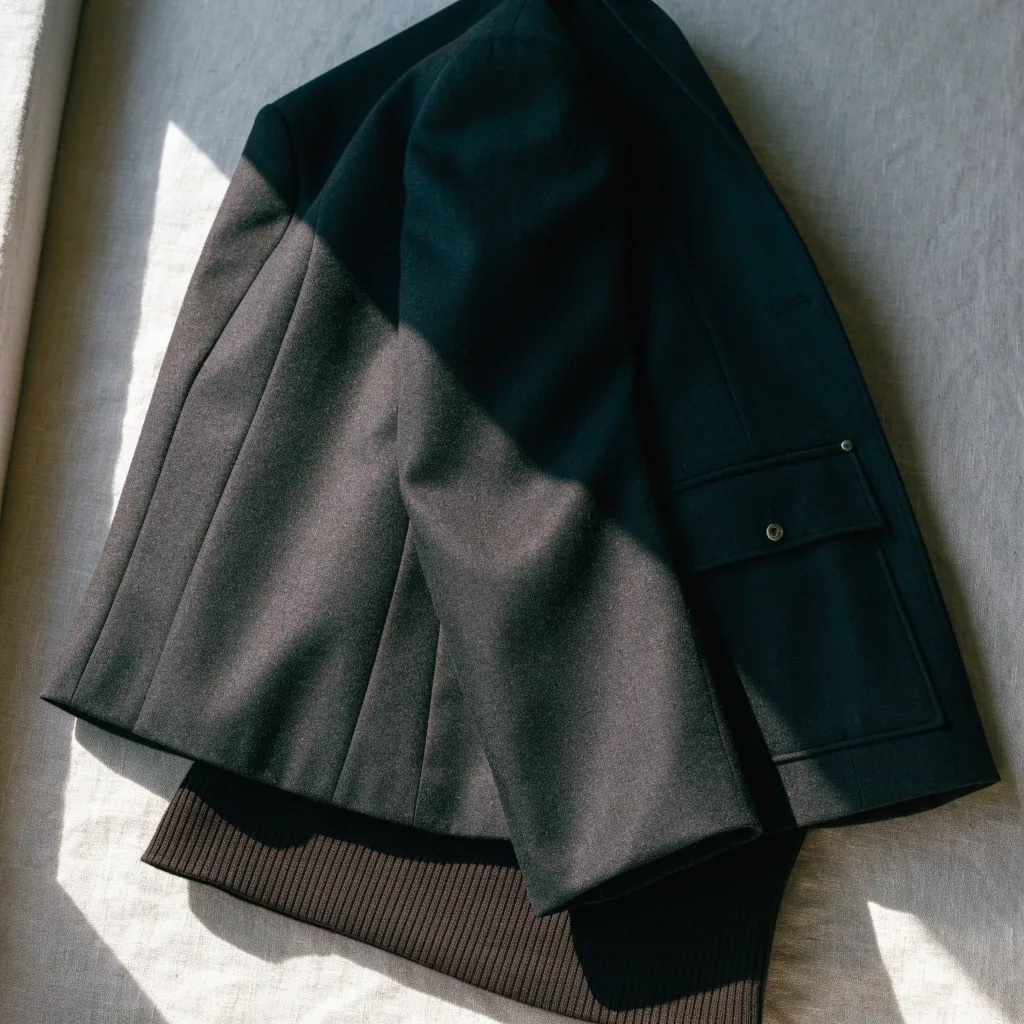
A well-cut blazer or trouser does more work than any trend piece, because it can be dressed up or down with a single swap. Heritage houses keep refining the same tailoring language for a reason: the shape is stable enough to build on. Chanel's tailoring shifts get attention precisely because they change that stable reference.
For a capsule, this means one or two tailored pieces that fit properly, and a tailor who can adjust them. Alterations are part of the cost, not an extra. Budget the fitting the way you budget the garment.
Bring to the fitting
- The shoes you wear with the trouser
- The base layer you will wear underneath
- The belt you actually own
Workwear and refined everyday pieces
Cuyana built its reputation on timeless essentials rather than trend churn, and that positioning is useful when you are planning a workwear-heavy capsule. The lesson is not the brand. It is that everyday pieces need to be judged on fit and repeat wear, not on how they photograph.
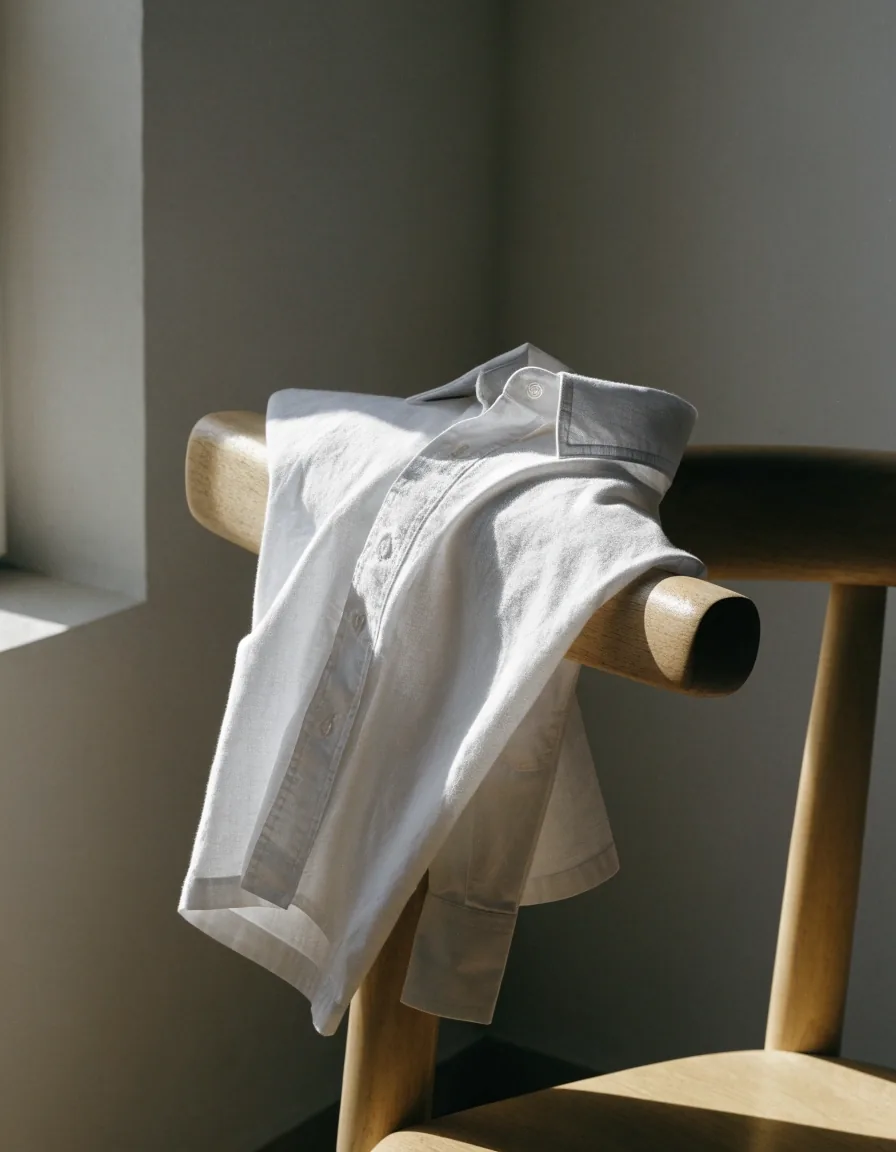
A plain shirt that fits your shoulder and stays tucked is worth more than three that look better on a hanger. Apply that test to everything in the base and mid-layer categories. Ask what the piece does on a Tuesday, not how it reads in a photograph.
Sustainable pieces as long-wear pieces
Sustainability in clothing usually comes down to how long something stays in use. Outerknown leans on casual staples rather than seasonal drops, and Thought Clothing focuses on calm, wearable basics with attention to material. Those are descriptions of approach, not certifications. For your capsule, the practical version is simple: buy fewer pieces, choose materials that hold up, and repair before replacing. A capsule and a long-wear strategy are the same strategy with different names.
Buy fewer
A short list you wear weekly outperforms a long one you rotate by mood. Fewer pieces also means each one gets repaired sooner.
Choose materials that hold
Dense wool, heavier cotton, and sturdy twill keep their shape. Thin knits and loose weaves need more care to stay presentable.
Repair before replacing
A dropped hem, a loose button, a worn heel. Most of these are quick fixes, and they keep a working piece out of the donation pile.
What to do with the leftovers
The pieces that do not make the capsule are not automatically trash. Some are seasonal, some are occasion-specific, and some just need a repair. Store the first two separately and keep them out of daily rotation so they stop creating noise. Donate or resell what no longer fits or suits you. Keep a small repair pile and actually take it in. Most people find that a third of their closet is fine, just misplaced.
Seasonal
Box it, label the box by season, and put it out of sight. If you did not open it last year, that is your answer.
Occasion
Wedding guest, interview, formal evening. Keep them out of the daily closet so they stop competing for space and attention.
Repair pile
Small, real, and actually taken in. A pile that never gets to the tailor is just a slower form of clutter.
Donate or resell
What no longer fits or suits you leaves the house. Resale works better than donation for pieces still in good condition.
When to rebuild, and when to adjust
A capsule needs a full rebuild rarely: after a major move, a body change, or a career shift. Otherwise, adjust. Replace the piece that wore out, add the layer you keep borrowing from a partner, and fix the gap you noticed this winter. Seasonal adjustments keep the system alive without a reset. If you find yourself rebuilding every year, the original plan was probably too rigid for how you actually dress.
Rebuild
A move to a different climate, a change in body shape, or a shift in how you spend your days. These change the constraints, and the plan follows the constraints.
Adjust
Everything else. One piece in, one piece out, once or twice a season. This is the normal state of a capsule, and it costs far less than a reset.
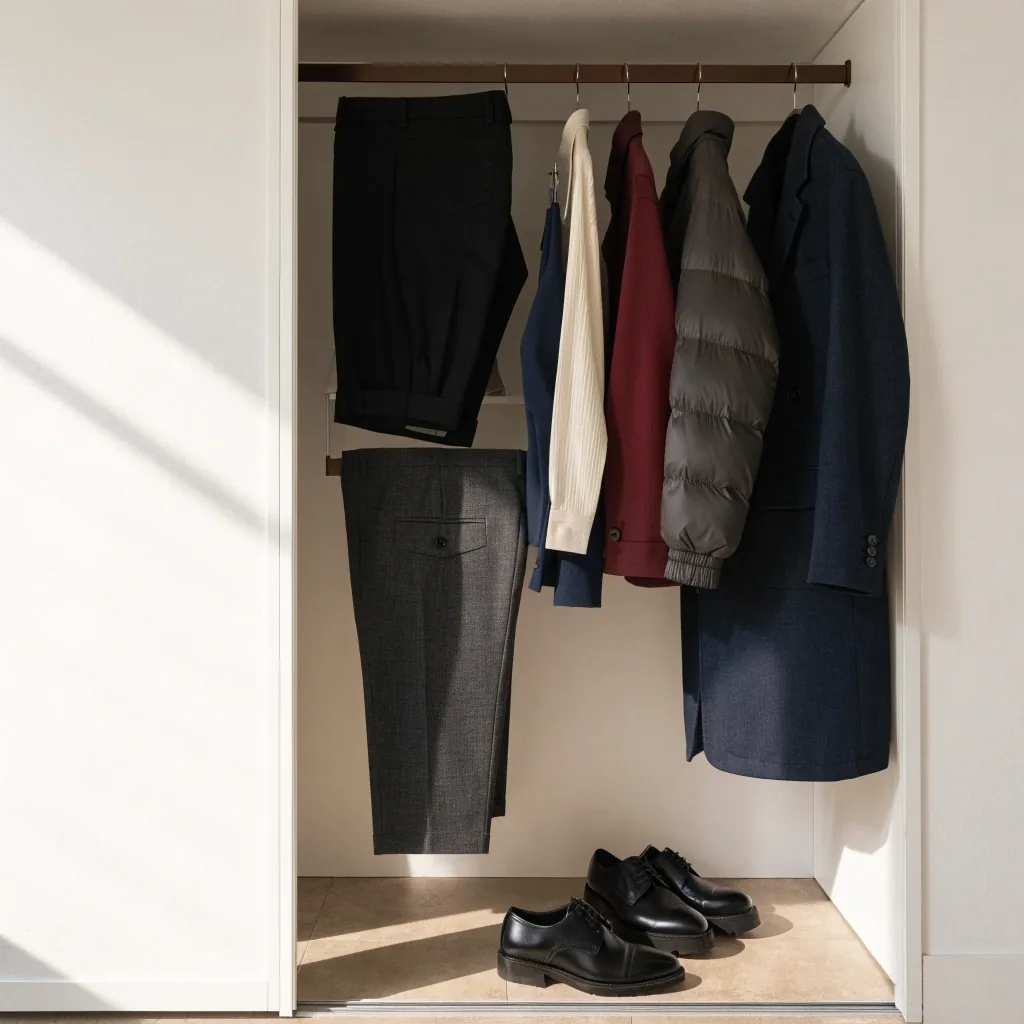
A first capsule in one weekend
If you are starting from nothing, keep the first version small. Two bottoms, three tops, one mid-layer, one outer layer, two pairs of shoes. That is enough to get through a normal week and to reveal what is missing. Live with it for a month before adding anything. The gaps will tell you what to buy far more accurately than a planning spreadsheet. This is slower than a shopping spree and considerably cheaper.
-
Pull two bottoms that fit today and three tops you will actually wear this week.
-
Add one mid-layer and one outer layer, chosen for the temperature you dress in most.
-
Finish with two pairs of shoes: one for walking, one for the evening.
-
Live with it for a month. Note what you reach past and what you borrow.
Questions we get about capsule wardrobes
How many pieces does a capsule actually need?
Enough to cover your week without repeating a full outfit more than twice. For most people that lands somewhere between twenty and thirty pieces including shoes. The number matters less than the balance: if one category is overloaded and another has a single working piece, the imbalance is what you feel each morning.
Do I have to replace everything at once?
No. Start with what already works, then replace pieces as they wear out. The point of the system is to stop the churn, not to begin it with one large order. If a piece still does its job, it stays in the rotation.
How do I handle a climate with four distinct seasons?
Keep the base and bottom categories steady across the year and let the mid and outer layers change. Storing the out-of-season layers separately keeps the daily closet honest and makes the wardrobe feel smaller without cutting anything out.
Where does tailoring fit into the plan?
One or two tailored pieces earn their place before anything trend-led, because a jacket or trouser can shift between settings with a single swap. Plan the alterations as part of the purchase, and bring the shoes and base layer you will wear with the piece to the fitting.
Keep going from here
The capsule is a starting frame, not a finished wardrobe. When you want the season context behind a piece, or a brand-by-brand read on how two approaches differ, the rest of the bureau covers it without pushing a purchase.
Editorial desk
Jeddah Vogue Bureau
1245 Broadway, Suite 402
New York, NY 10001, USA
Monday to Friday, 9:00 AM – 6:00 PM
+1-212-555-0198
[email protected]
We answer questions about the guides and the reporting behind them. No purchase involved.