
Trend Reports
Runway trends, translated for real dressing
Runway coverage is easy to find and hard to use. A show gives you a silhouette, a fabric, a color, and a mood, but it does not tell you whether any of it works on a Tuesday.
How to read a trend without overbuying
A trend is a direction, not a uniform. The useful question is which single element you can absorb without replacing everything else. If layered dressing is the story, maybe you add one mid-layer instead of a new outfit. If red is the accent, a knit or a pair of shoes is enough. That logic keeps a seasonal idea from turning into a seasonal bill, and it makes a trend easier to drop when it fades because you never rebuilt your wardrobe around it.
We track the same idea across different bodies, weather, and price levels before we call it a direction. One striking outfit is an idea. The same idea worn by different people in different cities is a trend worth reporting.
Absorb one element
Take the one piece that changes the outfit and leave the rest of the closet alone. A single mid-layer, a single shoe, a single knit.
Check the fit first
Hems, shoulder lines, and where a waist actually lands decide whether a runway proportion reads as deliberate or borrowed.
Test it on a weekday
If an idea only works in a photograph or only with one exact styling trick, it is not ready for a real week.
Fall 2026: the silhouette conversation
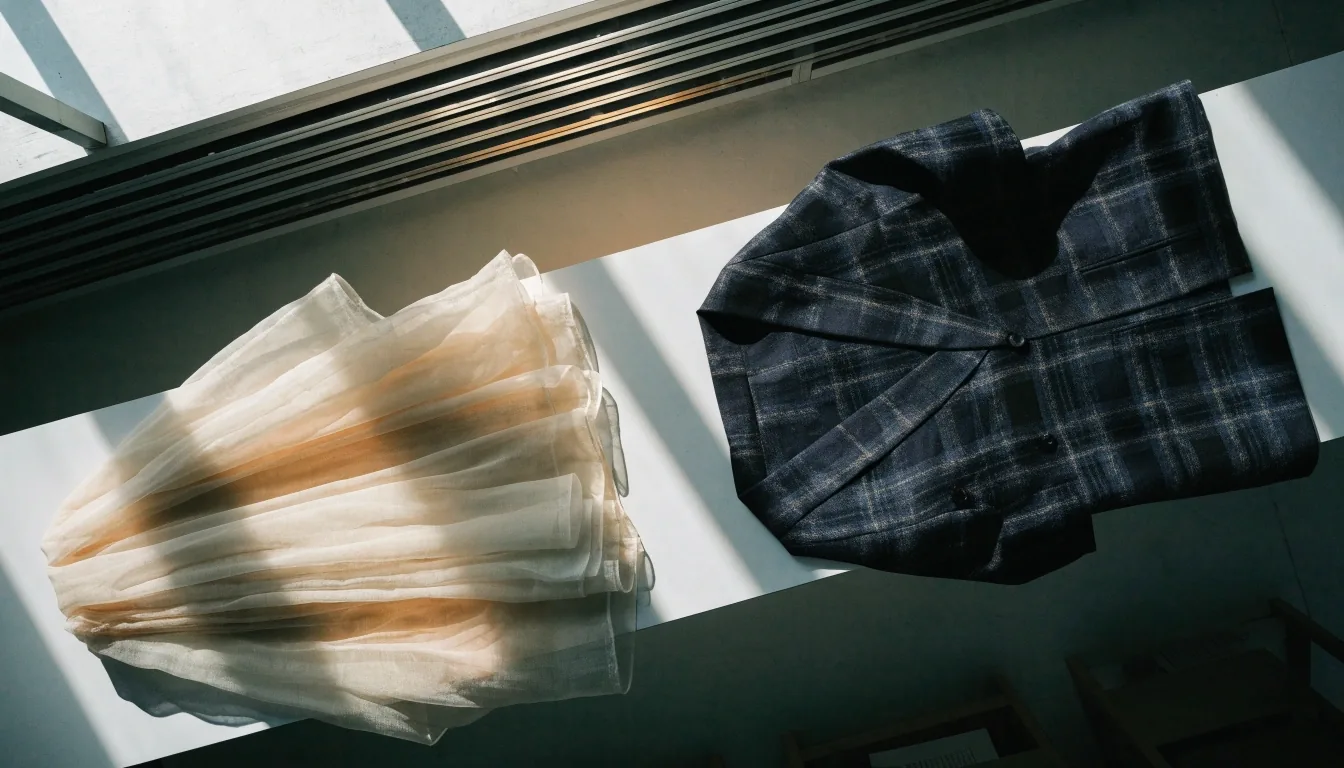
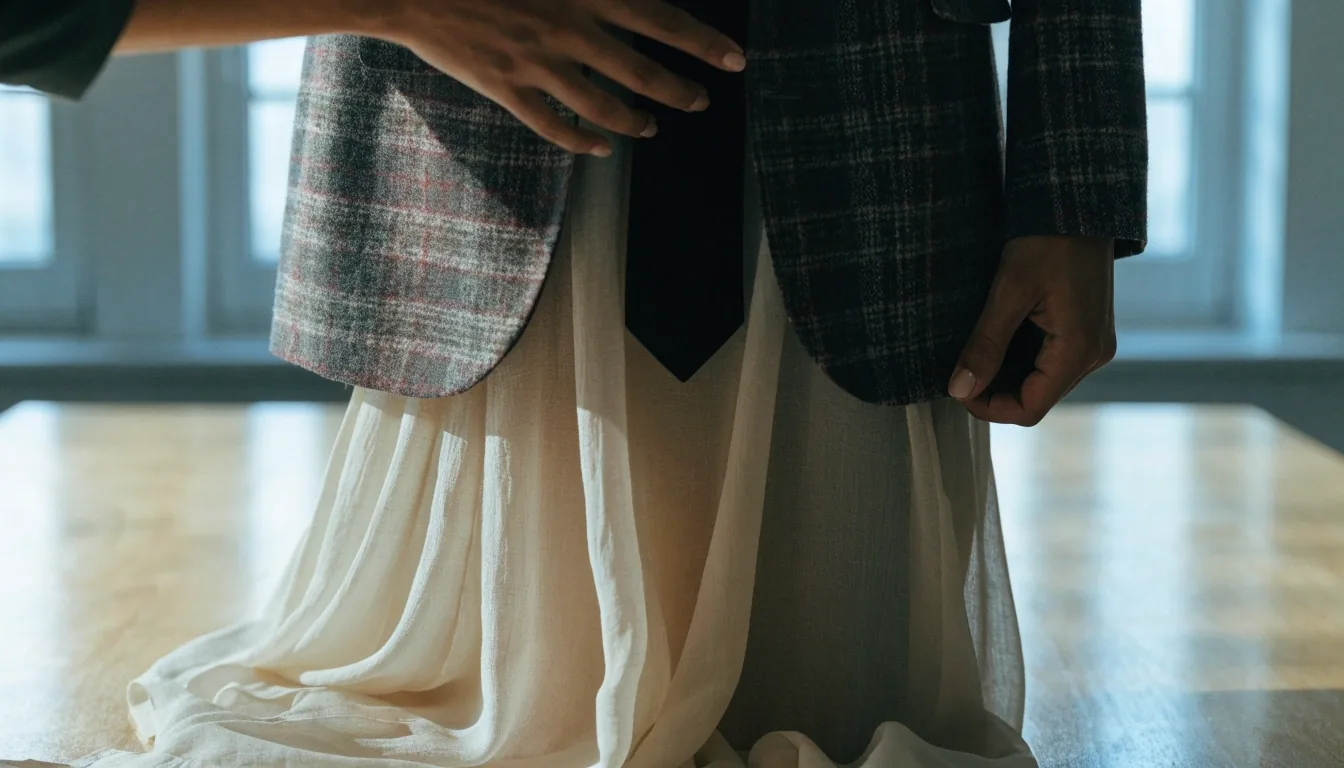
The clearest thread in fall 2026 coverage is proportion. Chanel's dropped waistlines and tailoring shifts keep appearing in reporting because they change where a garment sits on the body. Chloé's chiffon skirts in folksy plaid push in a softer direction, with volume and movement instead of structure. Read together, these two houses show a season negotiating between relaxed and sharp.
Tailoring shifts
Dropped waistlines move the visual waist below its usual point. Before you commit, stand in the mirror and find where the seam actually sits, then check the hem against the shoe you wear most.
Softer volume
Chiffon and plaid move with the body instead of holding a line. These pieces need a firm base layer underneath so the volume reads as chosen rather than accidental.
Red as a restrained accent
Red has moved from statement to tool. Celine, under Michael Rider's direction, has been using it as a controlled accent inside otherwise pared-back looks, and Khaite's fall coverage leans on red in a similar register.
- One element only A bag, a scarf, or a pair of loafers. Everything else stays neutral so the accent has something to push against.
- Skip the full reset Replacing an entire palette for one season is expensive and hard to undo. A single accent modernizes a minimalist wardrobe without touching the base.
- Works across seasons That is rare for a color trend. Red sits comfortably against grey, navy, camel, and denim, which keeps the piece usable after the season ends.
Layered dressing that survives weather
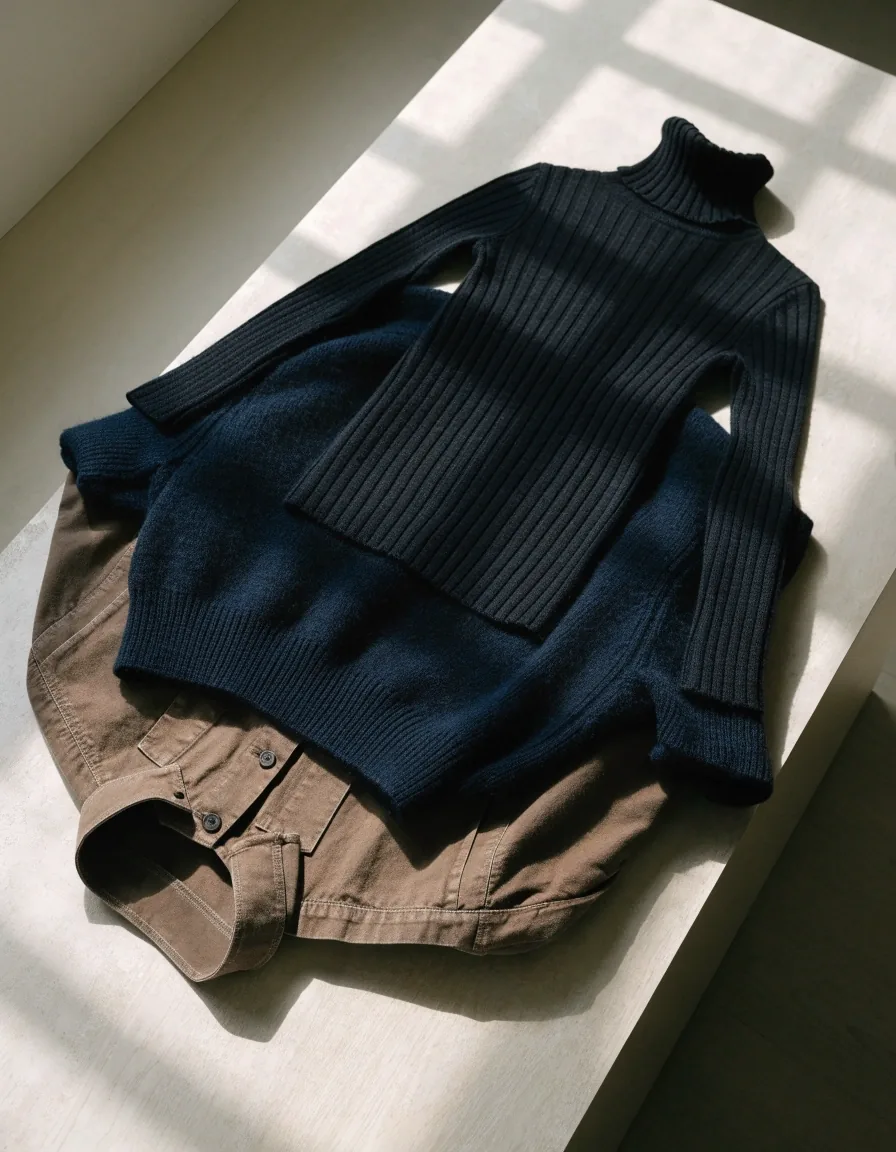
Layering is the most over-promised and under-explained trend of the season. The version that works is built from weights, not from count: a base layer that stays put, a mid-layer that adds warmth without bulk, and an outer layer you can remove indoors. Utility jackets, oversize knitwear, and thin turtlenecks carry most of that load.
If a layer only looks right when it is fully visible, it will fail the moment you take your coat off. Test each layer on its own before you build the stack, and check that the mid-layer still sits cleanly once the outer piece is off.
Order of the stack
- 1 A base layer with a close fit that holds its shape through the day.
- 2 A mid-layer of knit or thin turtleneck that adds warmth without padding the silhouette.
- 3 An outer layer you can take off indoors without the outfit collapsing underneath.
The working rule
Statement does not mean loud. It means the piece is doing visible work.
The checked shirt, reconsidered
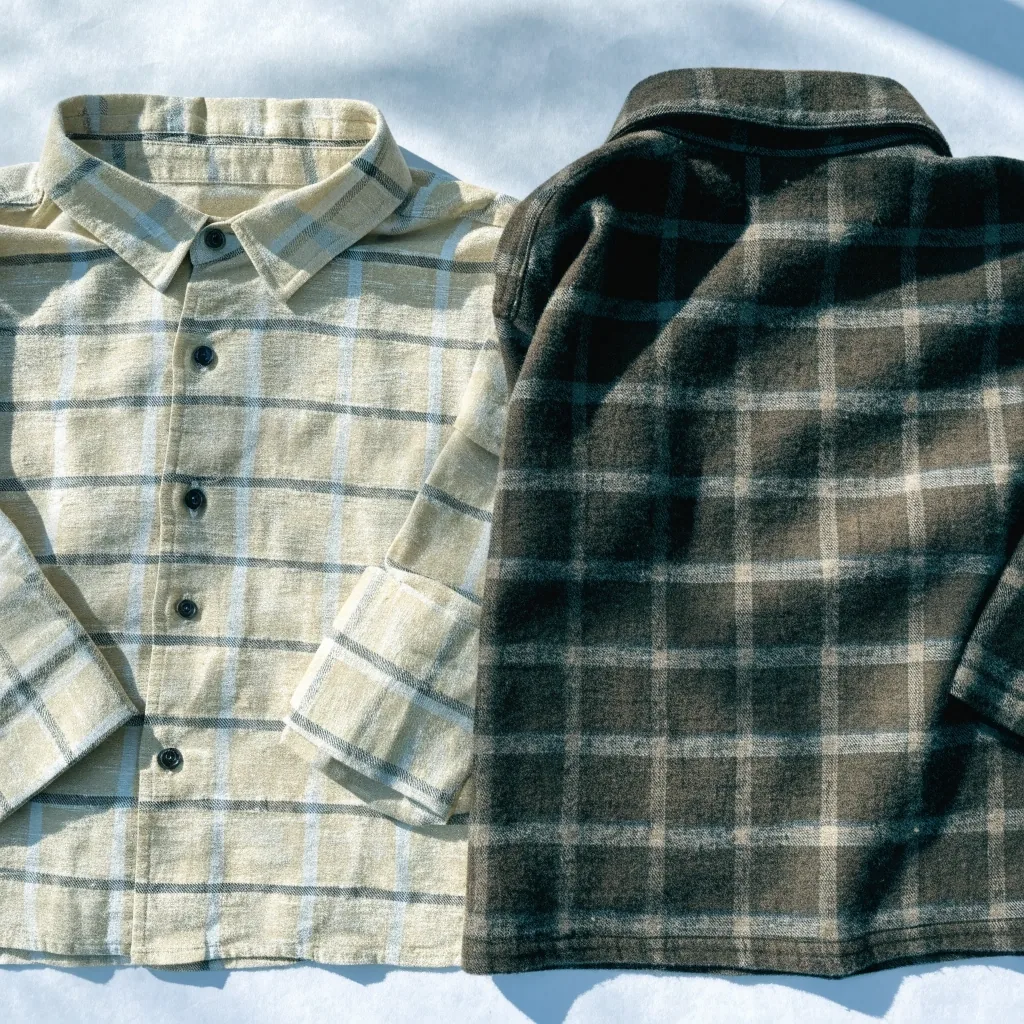
The checked shirt keeps returning because it is genuinely useful, not because it is exciting. In fall coverage it shows up as a layering piece under blazers, over tees, and tied at the waist.
The trick is fabric weight. A stiff flannel reads as workwear, while a softer brushed cotton reads closer to casual tailoring. Neither is wrong; they just pair with different bottoms. Read the two lanes below as a way to check what you already own before adding anything.
Stiff flannel
Holds a square line on the body and pairs best with denim, canvas trousers, and heavier boots. Wear it open as a light jacket rather than buttoned under a coat.
Soft brushed cotton
Falls closer to the body and sits comfortably under a blazer or a knit. Pair it with tailored trousers, a pleated skirt, or a simple loafer.
If you already own one, you probably do not need another. If you do not, a mid-weight version is the most flexible first purchase, because it moves between the two lanes without looking borrowed from either.
Statement accessories and scale
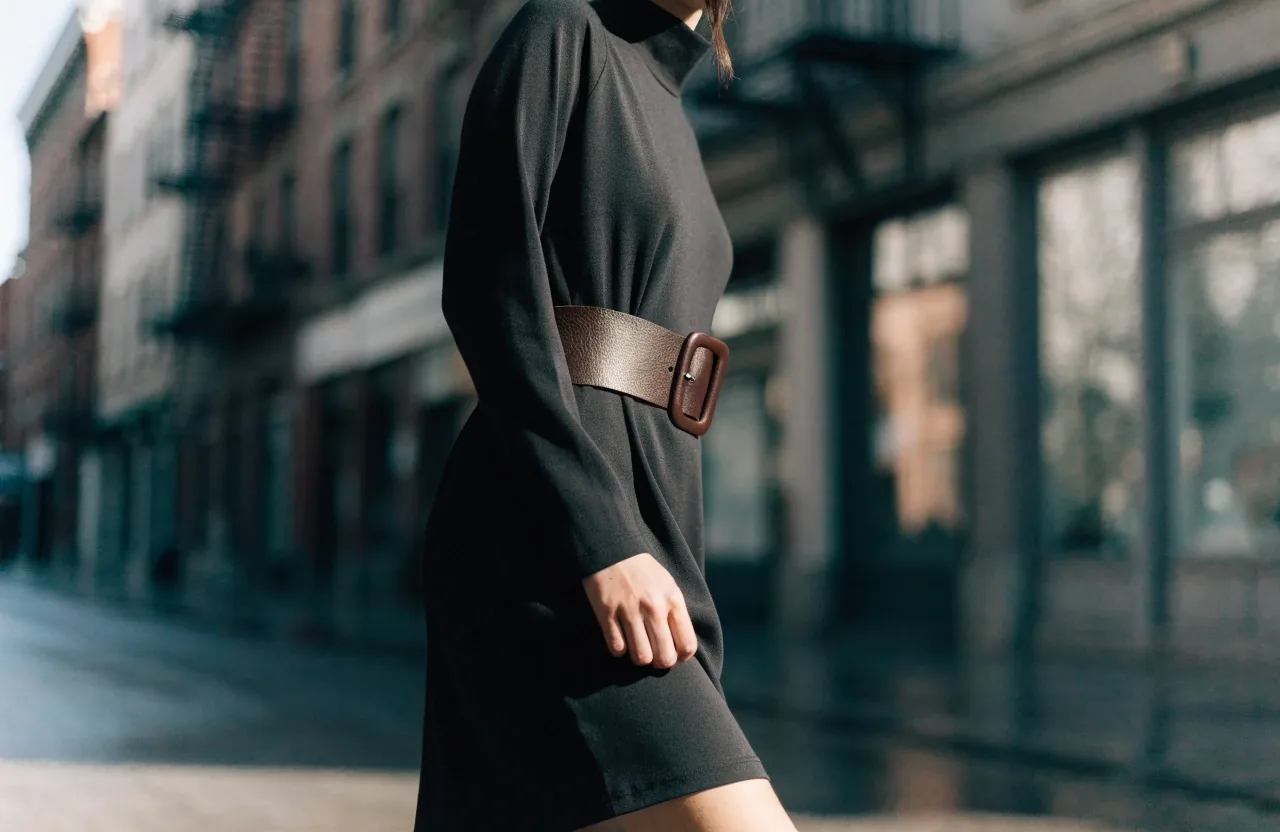
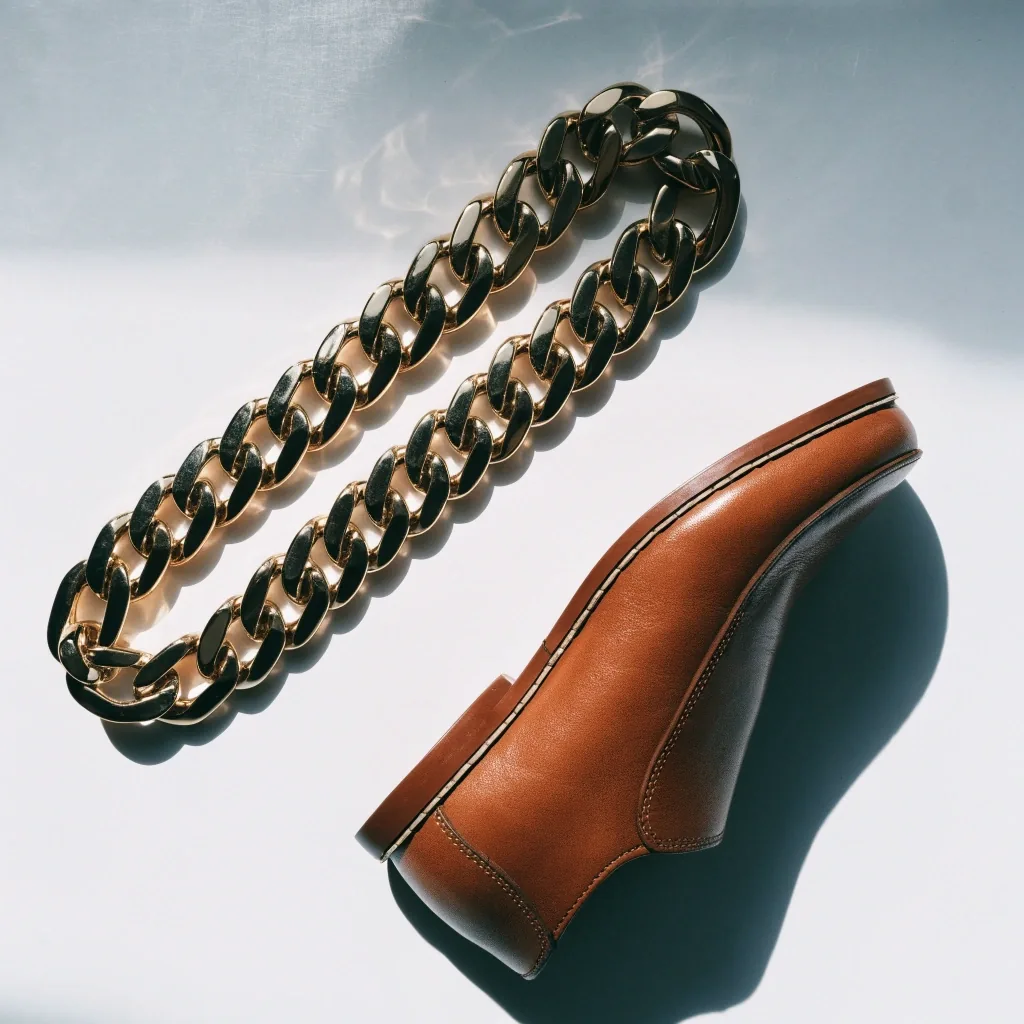
Accessories are where a trend becomes affordable. A single scaled-up piece — a wide belt, a chunky chain, an oversize tote — can carry a whole outfit without touching your clothing budget.
The risk is scale mismatch. An oversize bag next to an oversize coat can read as accidental rather than deliberate. We look at proportion first, then at how a piece works with what you already own.
Street style versus runway
Street style is where trends get tested in public, and it is not always kind. A silhouette that looks elegant on a runway can look unresolved on a sidewalk if the fabric does not move well or the proportions are off by an inch.
That is why we track repetition across cities and weeks before calling something a direction. One great outfit is an idea. The same idea on different bodies, in different weather, is a trend. That distinction keeps our reporting honest, and it is the reason some runway stories never make it onto this page as a recommendation.
We watch for two things in particular: whether the fabric moves when the wearer walks, and whether the proportion survives a normal stride rather than a posed frame. If either fails in three separate sightings, we hold the trend back and keep watching.
What shopping data adds
Search and demand data, like the kind Lyst publishes, shows which runway ideas actually translated into interest. A silhouette can dominate editor coverage and still produce no demand, which usually means it was admired rather than worn.
When demand jumps on a specific item, that is a signal worth noting, though not a verdict. We use that data to check our own instincts, not to tell you what to buy. It is one input among several, and it ages quickly.
Trends to sit out
Not every trend deserves your attention, and saying so is part of the job. You can admire these from a distance without bringing them home.
Needs one body type
Anything that only functions on one shape tends to have a short life and rarely travels well between people.
One exact styling trick
If the piece falls apart the moment you swap the shoes or drop the belt, it is a costume rather than a wardrobe piece.
Driven by one photograph
A single viral image can push an idea for a week. Without repetition in real streets, it rarely lasts a season.
The trends worth adopting usually solve a problem you already had: staying warm, looking put together on short notice, or making an older piece feel current again. If an idea does not answer one of those, it can stay on the runway.
Building a season around two changes
The most reliable way to engage with a season is to make two changes, not twelve. Pick one silhouette adjustment and one color or accessory move. That gives you a visible update while keeping the rest of your wardrobe stable and usable, and it makes next season cheaper because you are layering new ideas onto a base that already works.
Two changes is enough to feel current without turning your closet into a rotating experiment.
Questions we get about the reports
Short answers on how the reporting works, what it covers, and where to go next.
How often do you publish a new trend report?
Reports follow the season rather than a fixed calendar. We publish when a direction repeats across enough cities and weeks to be worth writing about, and we update an existing report when a trend shifts rather than starting a new page for every small change.
Do I need to buy anything to follow a trend?
No. This is an editorial resource, not a shop. Every idea here is described so you can check what you already own first. When we suggest an element, we explain what to look for in fabric, fit, and proportion so the choice is yours.
Why do some runway looks never appear here?
Some ideas depend on one exact styling trick or one specific shape to read at all. Those tend to fade fast, so we leave them out rather than send readers chasing them. A look also has to survive a sidewalk, not just a runway photograph.
Can I send in a trend I have been seeing?
Yes. Readers send sightings from their own cities, and repetition is exactly what we look for. Write to [email protected] or use the contact page, and tell us where you saw it and how often.
Questions about a trend, or a sighting to share?
The bureau is based at 1245 Broadway, Suite 402, New York, NY 10001, and answers reader mail Monday to Friday, 9:00 AM – 6:00 PM.
Reach us
This page is part of an editorial resource. It does not sell clothing, and nothing here is a product listing.